


Special Operations Executive - A New Instrument Of War
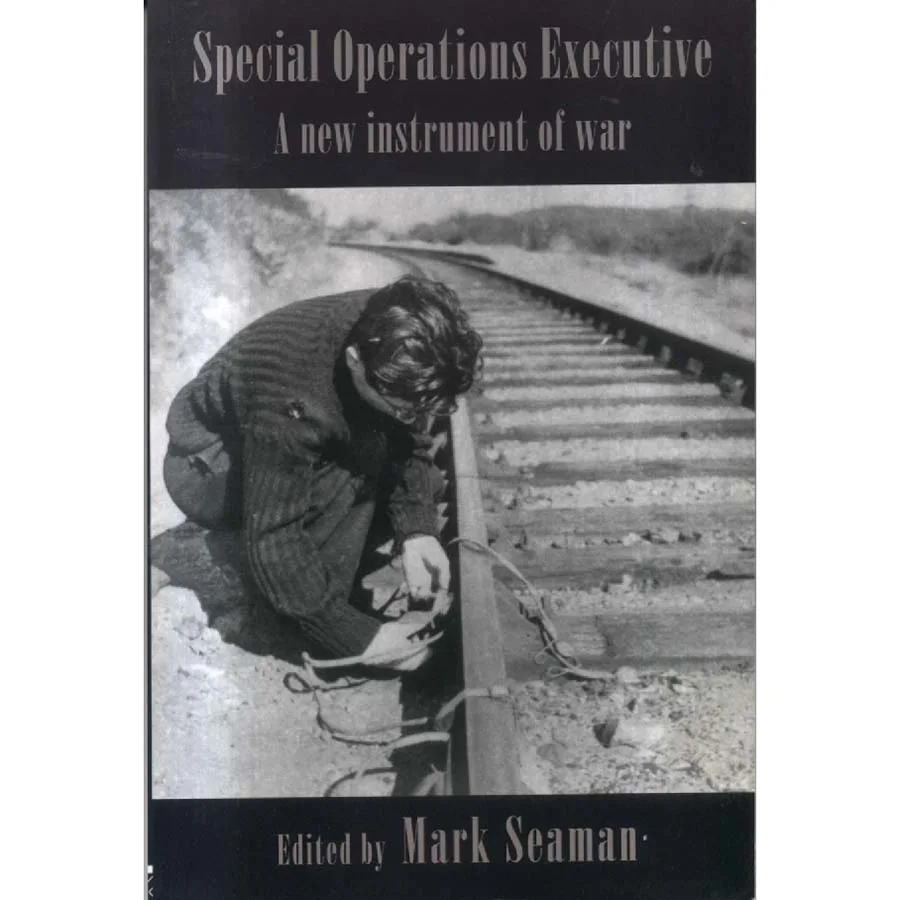
Publisher: Routledge
Format: Paperback
ISBN: 9780415384551
Mark Seaman’s Special Operations Executive: A New Instrument of War is about the moment Britain looked at the Second World War, decided ordinary warfare was not quite complicated enough, and created an organisation whose basic working principle was: go behind enemy lines, find brave people, give them explosives, code names and terrible odds, then hope history is grateful later. Thus the SOE entered the stage, not so much a department as a controlled administrative panic with parachutes.
The Special Operations Executive was Churchill’s famous instrument for “setting Europe ablaze,” which sounds splendid until one remembers that fire, once issued as policy, has a habit of involving trains, bridges, wireless sets, safe houses, betrayal, reprisals, forged papers, night drops, blown covers and extremely tense conversations in kitchens. This was warfare by sabotage, resistance, subversion, intelligence and human nerve; a quieter sort of war only in the sense that everyone was trying very hard not to be heard.
This volume examines SOE as a new kind of weapon: part military force, part intelligence service, part political gamble, part amateur theatre with live ammunition. It looks at how such an organisation was conceived, organised and used, and how its methods fitted into the wider war. SOE’s business was not simply “cloak and dagger,” that cosy phrase which makes espionage sound like a dressing-up box. It was logistics, training, radio discipline, networks, explosives, language, trust, secrecy and the constant possibility that one weak link could turn a whole operation into a line in a casualty file.
The irony of SOE is that it was both wildly romantic and brutally practical. The romance gives us agents in occupied Europe, night flights, coded messages and resistance cells. The practicality gives us missed drops, broken radios, suspicious neighbours, inter-departmental quarrels, bad weather, inadequate cover stories and the grim discovery that courage does not automatically improve supply chains. Behind every daring operation was a stack of planning, improvisation and institutional squabbling trying to look like strategy.
Mark Seaman’s book is for readers who want SOE treated as history rather than costume drama: how it worked, what it was meant to do, how new it really was, and what sort of instrument Britain had made when conventional power alone was not enough. It is a useful corrective to the tendency to turn secret war into sepia glamour. A limpet mine may be romantic from a distance; up close it is mostly metal, timing and consequences.
For students of intelligence history, special operations, resistance warfare, Churchill’s war machine, and the murky borderland where policy becomes sabotage, this is a crisp and serious addition to the shelf. It belongs among books that understand the Second World War was not only fought by armies advancing across maps, but by small groups of people carrying things in suitcases that would make customs officers extremely animated.
As New copy, as sold by Crappy Old Books. Which is almost suspiciously tidy for a book about clandestine warfare, but there we are: no obvious signs of parachute damage, coded marginalia, or scorch marks from administrative sabotage. A clean copy of a sharp SOE study, ready to infiltrate the military history shelf under perfectly respectable Routledge cover.
Keep browsing: See more War books Other books by Mark Seaman
